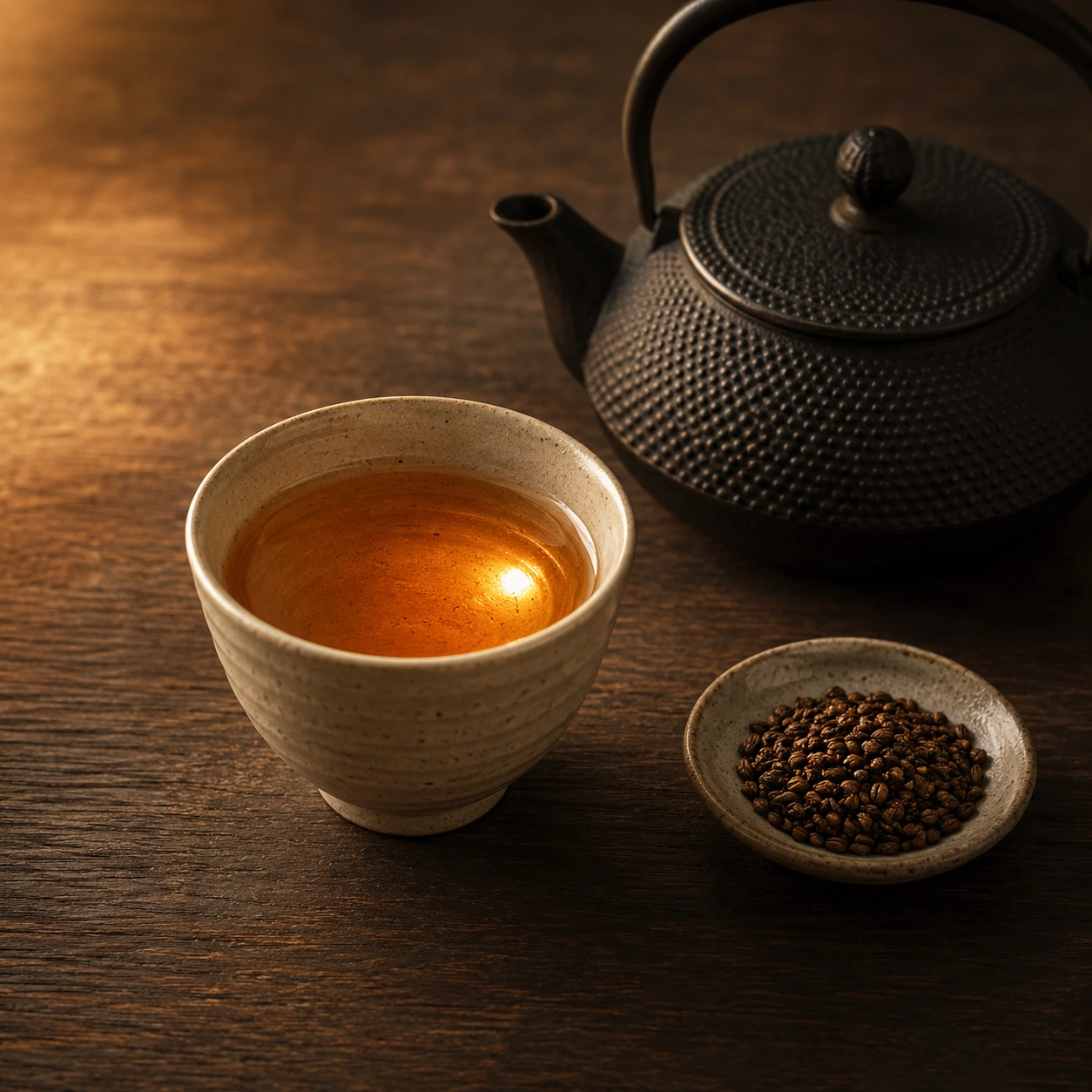
Japan's Evening Teas: What to Drink When You Want the Ritual Without the Caffeine
Japanese households switch teas as the day goes on. Here are the roasted, herbal and traditional evening options — what they taste like, what is in them, and what the evidence actually supports.
There is a rhythm to tea in a Japanese household that outsiders rarely notice. Sencha or coffee in the morning, something lighter with lunch, and then — reliably, from late afternoon onward — a switch to something roasted or herbal. It is not a health fad. It is a practical habit built around the fact that green tea has real caffeine in it and evenings are for sleeping.
The category that habit created is one of the most interesting corners of the Japanese tea shelf, and the least exported. Here is what is in it.
Hojicha: roasted, and the easiest place to start
Hojicha is green tea roasted in a porcelain pot over high heat until the leaves turn reddish-brown. The roasting does two things: it burns off a large share of the caffeine, and it converts the grassy, astringent compounds into toasty, caramel-sweet ones.
The result is a tea with essentially none of green tea's bitterness, a warm woody aroma, and a caffeine level low enough that it is what Japanese families serve to children and to elderly relatives. It is also served after dinner in restaurants, and in traditional inns as the last drink of the night.
The practical appeal: hojicha is nearly impossible to brew badly. Boiling water is fine. Over-steeping is fine. Where sencha punishes carelessness with bitterness, hojicha just gets a bit stronger.
Powdered and instant versions dissolve in cold or hot water and are how a lot of Japanese offices and households actually drink it.
Genmaicha: roasted rice, gentler than it looks
Genmaicha is green tea blended with roasted brown rice. It is not caffeine-free — there is still sencha or bancha in the blend — but the rice displaces perhaps a third of the leaf by volume, so a cup carries meaningfully less than straight green tea.
What you get in exchange is a nutty, toasty, faintly popcorn-like warmth that makes it the most food-friendly tea in Japan. It is the standard pour with a rice-based meal, and a good bridge if you want some green tea character in the evening rather than none.
Dokudami: the traditional herbal one
Dokudami (Houttuynia cordata) is a herb that grows wild across Japan and has been used in domestic herbal medicine for centuries. It is one of the three classic Japanese herbal teas alongside barley tea and job's tears, and it is completely caffeine-free — there is no tea leaf in it at all.
The name translates roughly as "poison-blocking plant," which tells you how it has traditionally been regarded: a general-purpose cleansing tea, drunk for skin, for regularity, and as a summer cooler. The fresh plant has a strong, distinctive smell that puts people off; drying and roasting it for tea removes almost all of that, leaving something earthy and mild.
On the health claims: dokudami has a long traditional use record and is widely drunk in Japan, but the modern clinical evidence is thin. Treat it as a pleasant, caffeine-free herbal tea with a long history rather than as a treatment for anything.
Blended night teas
A distinctly Japanese product category: multi-herb blends sold specifically as an evening drink, typically combining plants used traditionally for digestion and rest. They are convenient — usually tea bags, brewed like anything else — and caffeine-free.
The same caveat applies, more strongly. These are teas, not medicine. Products in Japan making specific health claims must be registered as functional foods with the relevant substantiation; a general herbal blend is sold as a beverage. Enjoy the ritual, and be sceptical of anything promising a specific outcome.
Mugicha: the one every Japanese fridge has
No article on caffeine-free Japanese tea is honest without mugicha — roasted barley tea. It contains no tea leaf and therefore no caffeine at all, it is drunk cold by the litre through Japanese summers, and it is given to infants.
The flavour is toasty and grain-sweet, somewhere between hojicha and coffee without the bitterness of either. It is made by cold-brewing a bag in a jug in the fridge overnight, and virtually every household in the country has a jug of it from June to September.
If you are building a caffeine-free rotation, mugicha is the volume drink and hojicha is the hot cup.
What "caffeine-free" actually means here
Worth being precise, because labelling in this space is loose:
| Tea | Caffeine |
|---|---|
| Mugicha (barley) | None — no tea leaf |
| Dokudami | None — no tea leaf |
| Herbal blends | None, unless they contain green tea |
| Hojicha | Low — roasted, but still tea |
| Genmaicha | Moderate — diluted green tea |
| Sencha | Moderate |
| Matcha | High — you consume the leaf |
Only the first three are genuinely caffeine-free. Hojicha is low, not zero, and if you are highly sensitive that distinction may matter at 10pm.
Building an evening rotation
A sensible three-tea setup, which is roughly what a Japanese household keeps:
- Hojicha for the hot after-dinner cup. Toasty, comforting, low caffeine.
- Mugicha for volume, cold, especially in warm months.
- One herbal — dokudami or a blend — for variety and for the nights you want zero caffeine.
Brew hojicha with boiling water for thirty seconds to a minute. Cold-brew mugicha overnight. Herbal teas want a longer steep than tea leaf — three to five minutes — because you are extracting from tougher plant material.
Frequently asked questions
Does roasting remove all the caffeine from hojicha? No. It reduces it substantially — hojicha typically has a fraction of sencha's caffeine — but it does not eliminate it. Roasting also does not remove caffeine as effectively as it removes astringency.
Can I drink these while pregnant? Ask a doctor rather than an article. Herbal teas in particular are not automatically safe simply because they are caffeine-free, and dokudami in particular has traditional uses that warrant a conversation.
Do herbal teas keep as long as green tea? Generally longer. There is no fresh-grass note to lose, so a dried herbal tea holds up for a year or more in a sealed container. Green tea, including hojicha, is best within a couple of months of opening.
Is there a caffeine-free matcha? Not really — matcha is powdered whole leaf, so the caffeine comes with it. Hojicha powder is the closest substitute if you want a whisked, powdered evening drink.
If you want the full picture of where these sit among Japan's other teas, start with the guide to Japanese green tea types.