Japanese Drip Coffee at Home: Single-Serve Bags, Konbini Blends and Why They Work
Japan turned pour-over into a single-use paper bag that hangs on your mug. Here is how the format works, what to buy, and why Japanese blends taste the way they do.
Japan takes coffee unusually seriously for a tea country. It has a century-old kissaten café culture built on slow hand-drip, some of the most obsessive independent roasters anywhere, and — at the other end — convenience-store coffee that is genuinely, unignorably good.
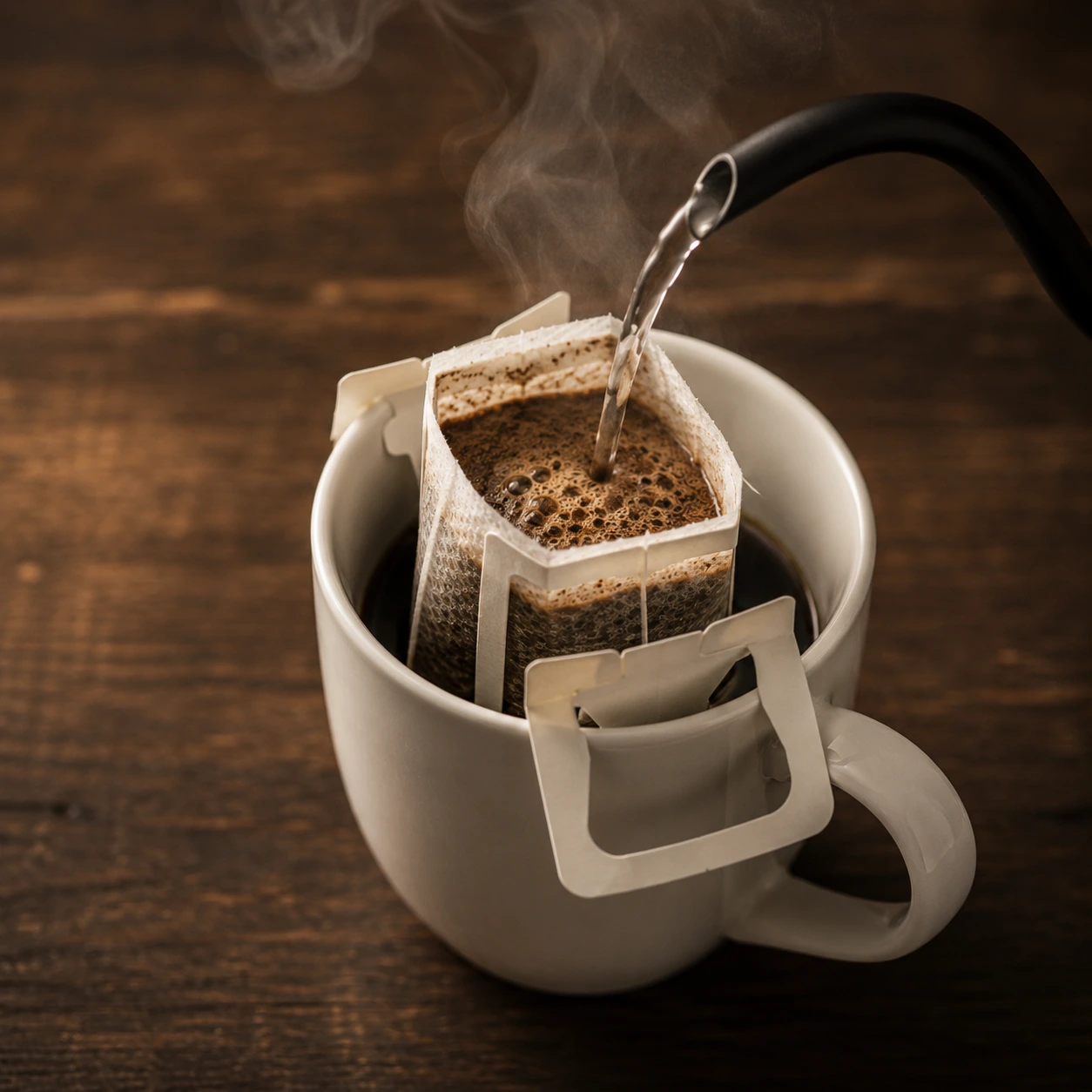
Between those two poles sits an invention that has not travelled nearly as far as it deserves: the single-serve drip bag. A sealed paper sachet of ground coffee with two cardboard wings that hook over the rim of a mug. You tear the top, hang it, pour hot water in two or three stages, and lift it out. Real pour-over coffee, no equipment, no grinder, no cleanup, ninety seconds.
It is the best-value coffee format in the world for anyone without a kitchen full of gear, and Japan makes it better than anywhere.
How to actually use a drip bag
Most people pour once and get thin, sour coffee. The method matters, and it takes fifteen extra seconds.
- Tear along the marked line and unfold both cardboard wings, hooking them over the rim of the mug. The bag should hang above the base, not sit in it.
- Bloom. Pour just enough water to wet the grounds — around 20ml — and wait 20–30 seconds. The bed will swell and release CO₂. Skipping this is the single biggest cause of sour, hollow drip-bag coffee.
- Pour in two or three stages, in slow circles, keeping the water level below the rim. Total around 140–180ml.
- Lift the bag out as soon as it stops dripping. Leaving it in over-extracts and turns it bitter.
Water at roughly 90°C. Boiling water scorches the grounds; a kettle left off the boil for thirty seconds is about right.
A 40-bag box is the format that makes this a daily habit rather than an occasional novelty — it works out cheaper per cup than almost any café.
Japanese blends: what to expect
Japanese mass-market coffee is roasted noticeably darker than the current Western speciality norm, and blended rather than single-origin. That is a deliberate house style, not a shortcut. The target is a full-bodied, low-acid, chocolatey cup that works black and holds up to milk — the flavour profile of a good kissaten, which is where the taste was formed.
If you have been drinking light Nordic-style roasts, the first cup will read as heavy. Give it three. It is a different intent, executed well, rather than a worse version of the same thing.
The premium end of the convenience-store range is where this style is most obvious — a heavier roast, a fuller body, and a deliberate sweetness that comes from roast development rather than from a fruity origin.
Decaf, and why Japan does it well
Japanese decaf is generally processed by water or CO₂ methods rather than solvents, and the darker house roast is forgiving of the flavour loss decaffeination causes. The result is decaf that tastes like coffee rather than like a compromise — which matters if you are the kind of person who wants a cup after dinner.
This pairs neatly with Japan's broader evening habit of switching to low- or no-caffeine drinks — covered in Japan's evening teas.
Ground coffee for a full pot
If you own a dripper or a machine, bagged ground coffee from the same houses is the cheaper way to drink the same blends. Japanese ground coffee is typically packed for a medium-fine drip grind, which suits a cone dripper or a filter machine but is too fine for a French press.
Ratio to start from: 60g of coffee per litre of water — about 12g for a 200ml mug. Japanese blends are dense and dark, so if the standard ratio tastes heavy, go to 10g before you start blaming the beans.
Instant coffee, without apology
Japanese instant coffee is a genuinely different product from what most markets sell, and it is unembarrassed. Freeze-drying at scale, careful blending, and a domestic market that will not tolerate a bad cup have produced instants that stand up in a way the category rarely does.
They are also the practical choice for iced coffee — instant dissolves in cold water without the dilution problem that comes from pouring hot coffee over ice.
Café au lait sticks: the office format
The other Japanese coffee format worth importing: individually wrapped sticks of pre-blended coffee, milk powder and sugar. Tip into a mug, add hot water, stir. They are ubiquitous in Japanese offices and homes, they need no fridge, and they are far better than the equivalent Western "3-in-1" sachets.
For travel, hotel rooms, or a desk drawer, they solve a real problem.
Iced coffee, the Japanese way
Japan drinks an enormous amount of iced coffee, and the traditional method is flash brewing — brewing hot directly onto ice, rather than cold-brewing over hours.
The technique: use your normal dose of coffee, but replace roughly 40% of the brew water with ice in the receiving vessel. Brew hot as usual. The coffee hits the ice, chills instantly, and the aromatics that cold brew never extracts are preserved. It takes three minutes rather than twelve hours, and it tastes brighter and more complex than cold brew — which is smooth but comparatively flat.
A drip bag does this perfectly: hang it over a mug half-filled with ice, and pour as normal with slightly less water.
Frequently asked questions
How long do drip bags stay fresh? Usually a year sealed, but the aroma peaks in the first few months. The nitrogen-flushed individual sachets protect the coffee far better than a resealed bag of grounds.
Can I reuse a drip bag? No. The dose is calibrated for one cup and the grounds are spent.
Is Japanese coffee stronger than Western coffee? Darker-roasted and fuller-bodied, but not necessarily higher in caffeine — darker roasts have marginally less caffeine by weight than lighter ones. What you are tasting is roast development, not strength.
What grind do I need for a French press? Not this. Japanese pre-ground coffee is cut for drip. For a press you want a coarse grind, which means buying beans and grinding yourself.
Are drip bags worth the price per cup? Compared to a café, hugely. Compared to a bag of grounds you brew yourself, you are paying a premium for convenience and packaging. The honest answer is that they are the best option for anyone who would otherwise buy coffee out, and a small luxury for anyone who already owns a dripper.